Video intelligence report · source checked

Five free repos.
Six tools on screen.

A complete, practical scrape of every repository named or visibly demonstrated in the supplied 51.9-second video—plus a check of the narration against the projects’ own documentation.

5 named projects 1 extra repo shown 51.912s analyzed 720×1280 · 30 fps Repository snapshot: 12 Jul 2026
Original media

Watch with the map beside it

Editorial accuracy

What the reel gets right—and compresses

The reel is directionally useful, but it mixes marketing shorthand, a separate repository’s UI, and a few claims that need prerequisites or qualification.

Video claimResultSource-checked finding
Camofox makes agents “invisible” to bot detectionMarketing shorthandThe wrapper uses Camoufox, a Firefox fork that spoofs fingerprint surfaces at the C++ implementation level. The repo claims broad bypass capability, but no browser can guarantee invisibility on every site.
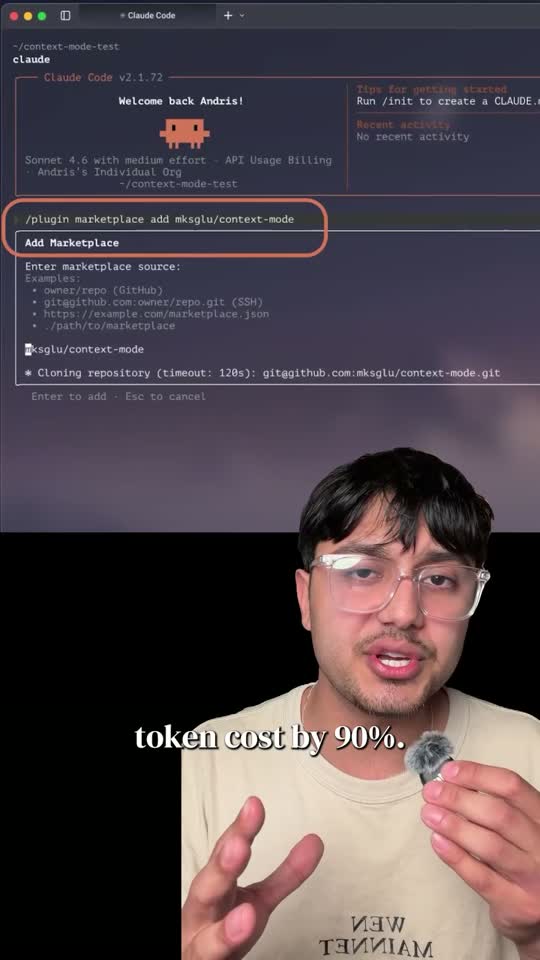
“Cuts token cost by 90%”Two truths mixedCamofox’s accessibility snapshots are claimed to be about 90% smaller than raw HTML. However, the screen recording at this moment shows mksglu/context-mode, which separately reports up to ~98% context savings in its own benchmarks.
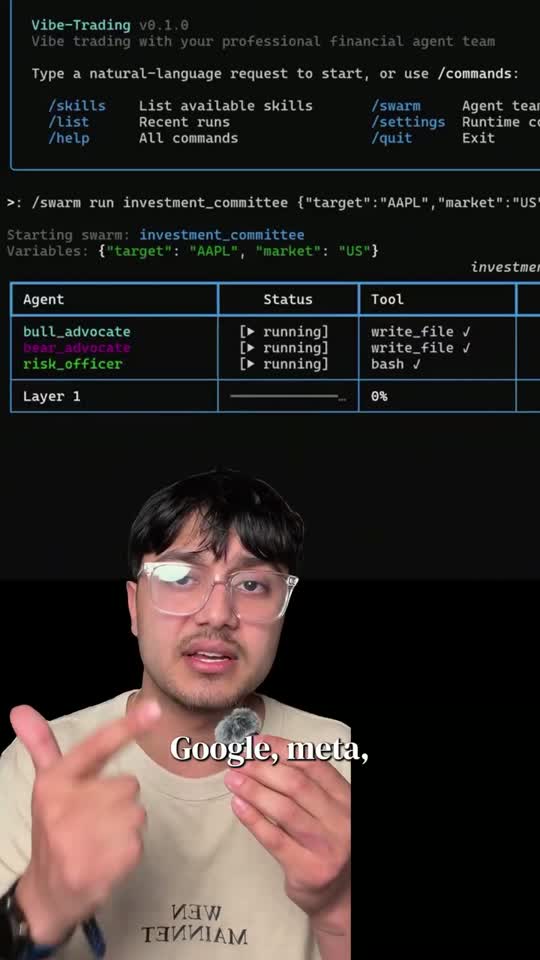
Claude Ads runs 190 checksNow outdatedThe current public README advertises 250+ total checks. It precisely verifies a 209-check catalog for Google, Meta, LinkedIn, TikTok, and Microsoft; several additional platform counts remain inline/estimated pending the project’s Wave 3 catalog work.
Agentic Inbox drafts replies and email never leaves “your account”Mostly supportedMail is handled inside the user’s Cloudflare deployment, stored in Durable Objects/R2, and analyzed with Workers AI. It is self-hosted on Cloudflare—not purely on the local computer. Drafts require confirmation before sending.
Open‑LLM‑VTuber runs fully offline, sees screen, hears voice, never forgetsPartially supportedOffline LLM/ASR/TTS configurations are supported, plus screen/camera perception and voice. Chat logs persist, but the README says its built-in long-term-memory feature was temporarily removed; optional Letta memory is documented separately.
HyperFrames uses plain HTML, not React/JSX, and returns MP4SupportedIts authoring model is HTML/CSS plus seekable animation adapters; the local renderer captures deterministic frames in headless Chrome and encodes/mixes them using FFmpeg. Node.js 22+ and FFmpeg are required.
All are “free repos”License nuanceThe five named projects are source-available without per-use fees, but operational costs may remain (models/APIs, Cloudflare usage, proxies, compute). Context Mode uses ELv2 rather than an OSI open-source license; most others use MIT or Apache‑2.0, with Open‑LLM‑VTuber’s bundled Live2D samples separately licensed.
Repository scrape

Every tool, fully mapped

Search by feature, platform, runtime, or use case. GitHub counts are a point-in-time snapshot and will change.

Camofox Browser frame extracted from the supplied video
Named #1 · browser automation

Camofox Browser

A REST API and OpenClaw plugin around Camoufox, designed to give agents a stealthier Firefox-based browser, compact accessibility snapshots, stable element references, isolated sessions, and deployment-friendly controls.

github.com/jo-inc/camofox-browser ↗
Stars7,593
Forks787
PrimaryJavaScript
LicenseMIT
Default port9377

What it does

  • C++-level spoofing via Camoufox for WebGL, AudioContext, screen geometry, WebRTC, hardware concurrency, and related fingerprint surfaces.
  • Agent-oriented snapshots with stable e1/e2 references; the project claims roughly 90% less text than raw HTML.
  • Click, type, press, scroll, navigate, wait, links, images, downloads, screenshots, structured extraction, and history navigation.
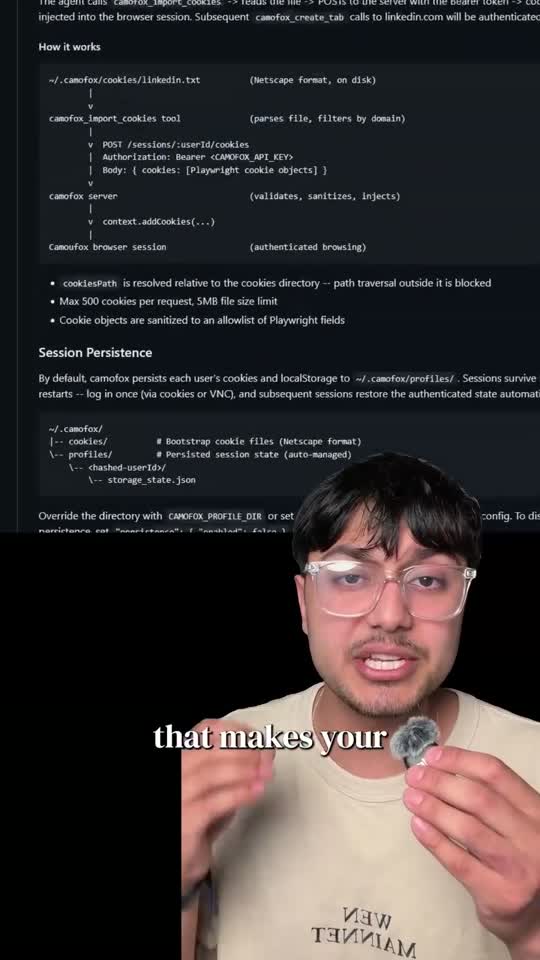
  • Per-user session isolation, cookie import, persisted storage state, Playwright traces, proxies with GeoIP alignment, and VNC login support.
  • Search macros and YouTube transcript extraction through optional yt-dlp.

Best fit / watch-outs

  • Best for: self-hosted browsing agents, authenticated research, compact page interaction, and sites hostile to stock headless browsers.
  • First npm install downloads a Camoufox binary of roughly 300 MB.
  • Anti-detection is an arms race; “bypass” is a project claim, not a permanent guarantee.
  • Crash/hang telemetry is enabled by default, anonymized, and sent to an auditable Cloudflare Worker; disable with CAMOFOX_CRASH_REPORT_ENABLED=false.
  • Use CAMOFOX_ACCESS_KEY for any exposure beyond loopback. Cookie import is separately gated by CAMOFOX_API_KEY.
Verdict: unusually agent-friendly browser plumbing; security and telemetry settings deserve deliberate configuration before remote deployment.

Fastest start

# OpenClaw plugin
openclaw plugins install @askjo/camofox-browser

# Standalone
npx @askjo/camofox-browser
# http://localhost:9377 · OpenAPI: /openapi.json · Docs: /docs
API and deployment inventory

Tab lifecycle: create/list/stats/close tabs, close a group, or close all tabs for a user. Interaction: snapshot, click, type, keypress, scroll, navigate, wait, links, images, downloads, screenshot, back, forward, refresh, and schema-driven extract. Session APIs: cookie injection, storage-state export, trace listing/download/deletion. Server APIs: health, metrics, readiness, stop, and documentation.

Deployment: npm/source, Docker, Windows PowerShell build script, Fly.io guidance, and Railway configuration. Supports x86_64 and aarch64. Lazy startup and idle shutdown target about 40 MB while idle.

Notable limits: cookie files are sandboxed to a configured folder, capped at 5 MB and 500 cookies/request; traces default to 50 MB and 24-hour retention. Firefox-based Camoufox cannot use Playwright’s Chromium-only recordVideo, so the project uses richer Playwright trace archives instead.

Claude Ads segment frame extracted from the supplied video
Named #2 · paid media audit

Claude Ads

A local-first Claude Code skill suite for paid-ad audits, planning, scoring, reporting, creative work, and PPC calculations across eight major advertising ecosystems.

github.com/AgriciDaniel/claude-ads ↗
Stars6,896
Forks1,027
PrimaryPython
LicenseMIT
Tests claimed41

Coverage and output

  • Google (80 verified checks), Meta (50), LinkedIn (27), TikTok (28), Microsoft (24), plus Apple 35+, Amazon 30+, and attribution/server-side checks.
  • Six parallel audit agents synthesize a weighted Ads Health Score from 0–100, grade A–F, prioritized findings, owners, estimated impact, and quick wins.
  • Commands cover platform deep-dives, business-type plans, budget, landing pages, competitors, PPC math, A/B tests, reports, brand DNA, creative concepts, image generation, and product photoshoots.
  • JSON and PDF deliverables support repeatable or white-label client reporting.

Reality check

  • It does not automatically log into ad managers. Default analysis uses exports, screenshots, pasted metrics, and account context.
  • Live integrations are optional MCP/API connections; campaign edits and posting remain manual.
  • The “250+” headline combines precisely cataloged checks with additional inline/estimated counts; the README explicitly distinguishes them.
  • Recommendations depend heavily on industry, account maturity, conversion quality, and budget. Benchmarks are not universal truth.
  • It is free software, but Claude usage and any external model/API integrations may cost money.
Verdict: a deep, auditable checklist/orchestration layer—not a replacement for platform access, business judgment, or accountable media buying.

Public install and quick start

# In Claude Code, use the public repository:
/plugin marketplace add AgriciDaniel/claude-ads
/plugin install claude-ads@agricidaniel-claude-ads

# Then try:
/ads audit
/ads google
/ads meta
/ads plan saas
/ads report
Complete command map and scoring notes

Platform: /ads google, meta, youtube, linkedin, tiktok, microsoft, apple, amazon. Cross-platform: audit, attribution, tracking, creative, landing, budget, competitor. Strategy/output: plan <type>, math, test, report, dna <url>, create, generate, photoshoot.

Plans: SaaS, ecommerce, local service, B2B enterprise, information products, mobile apps, real estate, healthcare, finance, agency, and generic. Quality gates: broad-match/smart-bidding pairing, 3× CPA kill rule, budget sufficiency, learning-phase protection, special-category compliance, privacy infrastructure, and creative diversity.

Cross-host installers: Codex CLI, Cursor, Windsurf, Gemini CLI, and Goose paths are supplied but marked experimental; only Claude Code is stated as end-to-end verified.

Agentic Inbox frame extracted from the supplied video
Named #3 · self-hosted email

Agentic Inbox

Cloudflare’s reference email client combines Email Routing, Email Service, Durable Objects, SQLite, R2, Workers AI, and an MCP endpoint into a custom-domain inbox with an embedded agent.

github.com/cloudflare/agentic-inbox ↗
Stars6,264
Forks791
PrimaryTypeScript
LicenseApache‑2.0
Email tools9

What you get

  • Send/receive UI, rich composer, reply/forward threads, folders, search, and attachments.
  • Each mailbox is a Durable Object with SQLite; attachment blobs live in R2.
  • An AI side panel can read, search, draft, and send using nine email tools.
  • New mail can trigger an automatic draft, but sending requires explicit confirmation.
  • Custom system prompts, persistent chat history, streaming Markdown, and visible tool calls.

Architecture and trust boundary

  • Frontend: React 19, React Router 7, Tailwind, Zustand, TipTap, Kumo.
  • Backend: Hono on Workers; agent: Agents SDK, AI SDK v6, Workers AI model @cf/moonshotai/kimi-k2.5.
  • Production auth requires Cloudflare Access JWT validation.
  • Critical caveat: anyone passing the shared Access policy can access all mailboxes—including through /mcp. There is no per-mailbox authorization.
  • Requires a Cloudflare account, a domain, Email Routing, Email Service, Workers AI, Access, and associated usage limits/costs.
Verdict: compelling Cloudflare-native reference app; treat the Access policy as the single security perimeter, not merely a login convenience.

Local development

npm install
npm run dev

# Set your domain in wrangler.jsonc, then:
wrangler r2 bucket create agentic-inbox
npm run deploy
Required deployment sequence
  1. Deploy to Cloudflare and provide the receiving domain; the flow provisions R2, Durable Objects, and Workers AI.
  2. Enable one-click Cloudflare Access for the Worker and save POLICY_AUD and TEAM_DOMAIN as Worker secrets.
  3. In Email Routing, send the domain catch-all to the Worker.
  4. Enable Email Service and configure the send_email binding.
  5. Open the deployed app and create a mailbox for an address on that domain.

The project’s README warns that clicking “Deploy to Cloudflare” is only the first part; the after-deploy steps are mandatory.

Open-LLM-VTuber frame extracted from the supplied video
Named #4 · local AI companion

Open‑LLM‑VTuber

A modular, cross-platform Live2D companion with real-time voice, interruption, visual perception, web/desktop clients, local or hosted models, and extensive character customization.

github.com/Open-LLM-VTuber/Open-LLM-VTuber ↗
Stars12,493
Forks1,456
PrimaryPython
Code licenseMIT
PlatformsWin · macOS · Linux

Capabilities

  • Hands-free voice conversation, user interruption without headphones, and TTS translation.
  • Camera, screenshots, and screen recording for visual perception.
  • Live2D expressions, click/drag touch feedback, proactive speech, inner-thought display, and persistent chat logs.
  • Desktop pet mode offers transparent background, always-on-top, mouse click-through, and draggable placement.
  • Configurable personas, Live2D imports, voice cloning, and swappable Agent/LLM/ASR/TTS modules.

Model ecosystem and caveats

  • LLM: Ollama, OpenAI-compatible APIs, Gemini, Claude, Mistral, DeepSeek, Zhipu, GGUF, LM Studio, vLLM, and more.
  • ASR: sherpa-onnx, FunASR, Faster-Whisper, whisper.cpp, Whisper, Groq, Azure, and more.
  • TTS: sherpa-onnx, pyttsx3, MeloTTS, Coqui, GPT‑SoVITS, Bark, CosyVoice, Edge TTS, Fish Audio, Azure, and more.
  • “Fully offline” requires selecting local implementations for every component; API-backed selections obviously need network access.
  • The main code is MIT, but included Live2D sample assets have separate terms and may require additional commercial permission.
Verdict: broad and flexible, but setup complexity, hardware/model latency, browser constraints, and Live2D asset licensing are real deployment considerations.

Recommended deployment skeleton

# --recursive is required because the frontend is a submodule
git clone https://github.com/Open-LLM-VTuber/Open-LLM-VTuber --recursive
cd Open-LLM-VTuber
uv sync
uv run run_server.py
# Configure conf.yaml, then visit http://localhost:12393
Requirements, memory, and setup notes

Requirements: Git and FFmpeg; the docs recommend uv. The current guide states Python ≥3.10 and <3.13 for pip/conda paths. Chrome is the recommended browser; Edge and Safari have known issues. Local inference benefits from Apple Silicon, NVIDIA, newer ROCm-capable AMD hardware, or a strong CPU; APIs can offload heavy modules.

Memory nuance: the repository README says its long-term-memory feature was temporarily removed while chat-log persistence remains. Current docs also describe an optional Letta-based implementation, which can increase latency. Therefore “never forgets” is not a safe blanket promise.

Version caveat: v1.0.0 introduced breaking deployment and conf.yaml changes. Do not use GitHub’s generic source ZIP; use a release archive or recursive clone so the frontend submodule is present.

HyperFrames frame extracted from the supplied video
Named #5 · HTML-native video

HyperFrames

HeyGen’s HTML-native rendering framework turns HTML, CSS, local media, and seekable animation timelines into deterministic videos locally, in Docker, or through distributed AWS Lambda rendering.

github.com/heygen-com/hyperframes ↗
Stars34,390
Forks3,228
PrimaryTypeScript
LicenseApache‑2.0
Agent skills20

Authoring model

  • HTML elements use data-composition-id, start, duration, dimensions, and track attributes.
  • Animations can use GSAP, CSS, Lottie, Three.js, Anime.js, WAAPI, TypeGPU, or custom frame adapters.
  • The renderer seeks each exact frame in headless Chrome and encodes/mixes output with FFmpeg.
  • No React/JSX or bundler is required; an index.html composition can play directly in a browser.
  • Includes a Studio, embeddable player, reusable catalog, CLI, renderer packages, and AWS Lambda tooling.

Agent workflows

  • Router plus workflows for product launches, websites, faceless explainers, PRs, captions, talking-head recuts, motion graphics, music videos, slideshows, general video, and Remotion migration.
  • Domain skills cover core composition, animation, keyframes, creative direction, media acquisition/generation, CLI operations, registry components, and Figma.
  • frame.md translates design-system rules into camera/frame guidance for an agent.
  • Catalog components include transitions, overlays, captions, charts, maps, shaders, and effects.
  • Requires Node.js 22+ and FFmpeg; development clones use Git LFS for large golden video baselines.
Verdict: the reel’s core description is accurate. HyperFrames is strongest when agents or teams already think fluently in web primitives and need reproducible rendering.

Fastest start

# Agent skill installation
npx skills add heygen-com/hyperframes --full-depth --yes

# Manual CLI workflow
npx hyperframes init my-video
cd my-video
npx hyperframes preview
npx hyperframes render
Package map and HyperFrames vs Remotion

Packages: hyperframes CLI; @hyperframes/core; engine; producer; studio; player; shader-transitions; and aws-lambda.

Compared with Remotion: both render browser frames with Chrome and FFmpeg. HyperFrames bets on plain HTML, no required build step, and adapter-driven seekable animations; Remotion uses React components and has a more mature cloud-rendering ecosystem. HyperFrames is Apache‑2.0 with no per-render fee threshold.

Build examples: launch films, PR walkthroughs, animated code diffs, chart races, maps, social clips, kinetic captions, docs/PDF/site explainers, reusable overlays, and interactive slide decks.

Context Mode frame extracted from the supplied video
Bonus correction · visibly shown, not named

Context Mode

The terminal shown during the “token cost” line installs mksglu/context-mode. It is a separate MCP/hook system that keeps large tool outputs outside an AI agent’s context, indexes working state, and retrieves only relevant snippets.

github.com/mksglu/context-mode ↗
Stars18,834
Forks1,324
PrimaryTypeScript
LicenseELv2
Clients claimed17

How it works

  • Execution tools run analysis in subprocesses so only selected stdout—not raw files, logs, pages, or API payloads—enters the model context.
  • Markdown and fetched pages are chunked into SQLite FTS5 with BM25, stemming, trigram search, reciprocal-rank fusion, proximity reranking, typo correction, and smart snippets.
  • Hooks record files, tasks, prompts, decisions, git operations, errors, constraints, environment changes, and other events for compaction/resume recovery.
  • Tools include batch execution, code execution, file processing, indexing, search, fetch/index, stats, diagnostics, upgrade, and purge.
  • Supports Claude Code, Codex, Copilot variants, Cursor, OpenCode, OpenClaw, Gemini, Kiro, Zed, Pi, and other clients with varying hook completeness.

Claims, privacy, and limits

  • Project benchmarks report 315 KB → 5.4 KB over a full session (~98% saved) and individual scenarios from 94–100%.
  • Those are repository benchmarks, not a guarantee for every workload. Savings depend on routing discipline and hook support.
  • Core data stays local in SQLite with no telemetry/account requirement; the optional ctx-insight command opens a hosted organization-analytics dashboard.
  • ctx_execute is still arbitrary code execution, not a full OS sandbox. Keep host permissions/sandboxing enabled.
  • ELv2 is source-available, but forbids offering it as a hosted/managed service and removing notices.
Verdict: this is the missing sixth repo in the edit. It supports the token-savings visual, but should not have been presented as though it were part of Camofox.

Claude Code install shown in the video

/plugin marketplace add mksglu/context-mode
/plugin install context-mode@context-mode
/context-mode:ctx-doctor
/context-mode:ctx-stats
Search, caching, and security details

Runtimes: JavaScript, TypeScript, Python, Shell, Ruby, Go, Rust, PHP, Perl, R, Elixir, and C#; Bun is auto-detected. Authenticated CLIs can inherit credentials without printing them into the conversation.

Caching: URL content defaults to a 24-hour TTL, supports forced refresh, and is cleaned after 14 days. Repeated search progressively throttles after eight calls to encourage batched retrieval.

Security: project-boundary checks apply to the file-processing tool; fetch hardening blocks dangerous schemes, link-local metadata, multicast, and reserved targets. Private/loopback fetches remain allowed by default for local development unless strict mode is enabled. Execution tools inherit process filesystem access, so approval still means approving arbitrary code.

Static source-security review

No obvious malware. Not safe by default in every deployment.

I reviewed the six repositories at the commits listed below for install hooks, shell/process execution, network listeners, authentication, secret handling, arbitrary code execution, SSRF, path traversal, HTML rendering, telemetry, and destructive filesystem behavior. Security risk is not the same as malicious intent: these projects appear legitimate, but several expose powerful capabilities that require hardening.

Malware indicatorsNone found

No clear stealer, miner, persistence implant, embedded private key, obfuscated payload, or deliberately destructive installer.

Highest deployment riskHyperFrames Producer

An exposed Producer service can accept render inputs without application authentication and launch Chromium with its sandbox disabled.

Known dependency scan20 production advisories

Camofox: 4 moderate. Agentic Inbox: 8 high + 8 moderate. The two npm lockfiles report fixes available.

Do not internet-expose these default services. Bind local tools explicitly to 127.0.0.1, add authentication at the application or reverse-proxy layer, firewall the ports, and run browser/code-execution workloads in a disposable container or VM with no host secrets. In Node, omitting the listen host accepts connections on an unspecified address (:: or 0.0.0.0), not loopback-only.
ProjectRiskConfirmed security-relevant behaviorRequired hardening
Camofox Browser
ce3a3b0
High app.listen(PORT) omits a host; the access key is optional and only selected sensitive routes use authMiddleware(). The plugin installer interpolates a parsed source into execSync("git clone ..."), creating shell-injection risk. Its postinstall downloads Camoufox and intentionally aliases the child-process import to avoid static scanners. Crash telemetry is enabled by default. Set a strong CAMOFOX_ACCESS_KEY, bind/firewall to loopback, never expose the API directly, and replace shell interpolation with execFileSync plus strict URL validation. Use CAMOFOX_SKIP_DOWNLOAD=1 for reviewed/offline installs and disable telemetry if required.
Claude Ads
283d9d2
Medium No malicious payload found. The documented pipe-to-shell install executes mutable remote code; installers clone a different/private community mirror by default and may run global pip install, including a --break-system-packages fallback. URL helpers do implement redirect-aware SSRF checks. Clone the public repository yourself, checkout a reviewed commit, inspect the skill prompts, use a virtual environment, and avoid pipe-to-shell installation. Give optional ad-platform/API keys the minimum permissions.
Agentic Inbox
48039b7
High Production Cloudflare Access JWT validation fails closed and checks issuer/audience—a good control. However, one shared policy grants every accepted user access to every mailbox, including MCP. MCP exposes send and permanent-delete operations; “confirm before sending” is a model instruction, not a code-enforced confirmation token. Remote images in sanitized email HTML can still act as tracking pixels. The lockfile currently reports 8 high and 8 moderate production advisories. Restrict the Access policy and require MFA, separate trust domains/instances, add per-mailbox authorization, enforce a server-side confirmation nonce for sends/deletes, block remote images by default, rate-limit destructive operations, and update/audit dependencies before deployment.
Open-LLM-VTuber
9923098
High if remote The safe default is localhost, but changing it to 0.0.0.0 exposes an unauthenticated server with wildcard CORS and WebSockets. API keys are plaintext YAML; a Hume key is placed in a WebSocket query string. A deprecated installer downloads and runs Miniconda without checksum verification, and the updater uses shell=True for internally constructed Git commands. Keep it local or place it behind authenticated TLS, restrict CORS, store secrets outside YAML where possible, redact/protect logs, avoid the deprecated installer, and run the VTuber under a low-privilege account.
HyperFrames
9d4ef64
Critical if exposed The standalone Producer accepts render/lint requests and powerful inputs such as project paths, preview URLs, and inline HTML without application authentication; its listener omits a host. Rendering launches Chromium with --no-sandbox. Untrusted compositions can perform network requests and consume heavy CPU/memory. CLI telemetry is on by default and agent skills can silently update themselves. Never expose Producer directly. Bind loopback, authenticate every route, validate/allowlist paths and URLs, block SSRF, cap jobs and input sizes, isolate Chromium in a disposable container/VM with egress controls and no secrets, and pin/approve skill updates. For Cloud Run, require IAM authentication and use a narrowly scoped service account/bucket.
Context Mode
f216b67
High trust ctx_execute intentionally executes arbitrary code in 12 runtimes. Its “sandbox” is process/temp-directory isolation, not an OS security sandbox, and most parent credentials remain in the child environment. Private/loopback URL fetching is allowed unless CTX_FETCH_STRICT=1. Postinstall modifies several Claude configuration/cache files, creates links/shims, and can install/rebuild better-sqlite3. Prompts, tool inputs, and events may persist in local SQLite. Use only with trusted agents/prompts, enable CTX_FETCH_STRICT=1 in shared environments, run inside an OS sandbox/container, pass an allowlisted environment with short-lived credentials, review deny policies, and protect/expire the SQLite data. Review postinstall changes before global installation.
Dependency-audit scope. I ran npm audit --omit=dev --json against the committed lockfiles. Camofox reported four moderate issues (express, js-yaml, qs, ua-parser-js). Agentic Inbox reported 16 issues, including high-severity findings in drizzle-orm, hono, react-router, and transitive packages. All were reported as fixable, but updates still need regression testing. The other repositories use different/mixed lockfile ecosystems and were not given an equivalent complete advisory scan, so “none reported” must not be inferred.
What this review can and cannot prove

This was a static, best-effort review of current shallow clones plus lockfile advisory checks. It included pattern searches and manual tracing of high-risk code. It did not include full dependency provenance verification, package signature validation, dynamic malware detonation, fuzzing, penetration testing, cloud-configuration review, or every transitive dependency's source.

Absence of an observed malicious indicator is not proof that a repository or a future release is safe. Pin exact commits, verify diffs and checksums, install without secrets present, and retest after every update.

Decision matrix

Which one is for what?

ProjectPrimary jobRuns whereNeeds / may costMain caveat
Camofox BrowserStealthier agent browsing and compact interactionLocal/VPS/Docker/Fly/RailwayCompute, optional proxies; ~300 MB browser downloadNo permanent anti-bot guarantee; telemetry on by default
Claude AdsPaid-media audit, planning, and reportsPrimarily Claude Code; other hosts experimentalClaude/model usage; optional platform APIsDoes not autonomously access or edit ad accounts
Agentic InboxCustom-domain email with an embedded agentYour Cloudflare accountDomain + Cloudflare services/usageShared Access policy grants all-mailbox access
Open‑LLM‑VTuberVoice/vision Live2D companionWindows/macOS/Linux, web + desktopLocal compute or optional APIs/modelsConfiguration complexity and separate Live2D asset terms
HyperFramesAgent-authored deterministic videoLocal/Docker/AWS LambdaNode 22+, FFmpeg, compute/storageHTML animation discipline; LFS-heavy dev repo
Context ModeContext compression and session continuityLocal MCP + client hooksNode/runtime supportELv2 restrictions; arbitrary execution tools still require trust
Speech-to-text

Clean transcript

Locally transcribed from the supplied audio, then corrected against visible product names. Punctuation is editorial.

00:00–00:02“Five free repos that should be illegal.”
00:02–00:11“Camofox Browser: a headless browser that makes your AI agents invisible to bot detection. Spoofs everything at C++ level and cuts your agent token cost by 90%.”
00:11–00:20“Claude Ads: a free Claude Code skill that runs 190 audit checks across your Google, Meta, YouTube, LinkedIn, and TikTok ads. Agencies charge four grand a month for this.”
00:20–00:27“Agentic Inbox: Cloudflare open-sourced an AI email client that reads your inbox and drafts your replies, and your email never leaves your account.”
00:27–00:35“Open‑LLM‑VTuber: a Live2D AI companion that runs fully offline, sees your screen, hears your voice, and never forgets a thing.”
00:35–00:48“HyperFrames: HeyGen open-sourced a video framework where your agent writes plain HTML and gets back a finished MP4. Everything Remotion does—no React, no JSX. So your agent can now make videos by itself for free while you sleep.”
00:48–00:52“Follow if you’re building an AI empire from your bedroom.”
Primary references

Sources and method

The report prioritizes each project’s current repository, README, license, and official documentation. GitHub popularity counts were retrieved from the GitHub repository API on 12 July 2026 (Asia/Colombo).

  1. Camofox Browser repository and README
  2. Underlying Camoufox documentation
  3. Claude Ads repository and README
  4. Agentic Inbox repository and README
  5. Cloudflare: Email for Agents
  6. Open‑LLM‑VTuber repository and README
  7. Open‑LLM‑VTuber official quick start
  8. HyperFrames repository and README
  9. HyperFrames official documentation
  10. Context Mode repository, benchmarks, and license
  11. npm audit documentation and remediation behavior
  12. Node.js network-listener host behavior
  13. Cloudflare Access JWT validation guidance
  14. HyperFrames security policy
Method note. The MP4 was probed with FFmpeg/FFprobe, sampled at two frames per second for visual inspection, and transcribed locally with Faster‑Whisper. Six public repositories were shallow-cloned at their then-current default branch for README/license and source-security inspection. The review searched install hooks, process execution, listeners, authentication, filesystem access, secret handling, SSRF, traversal, telemetry, and obfuscation indicators; npm production lockfiles received an advisory audit. Counts, claims, commands, and vulnerabilities can change after this snapshot; open the linked sources before production use.